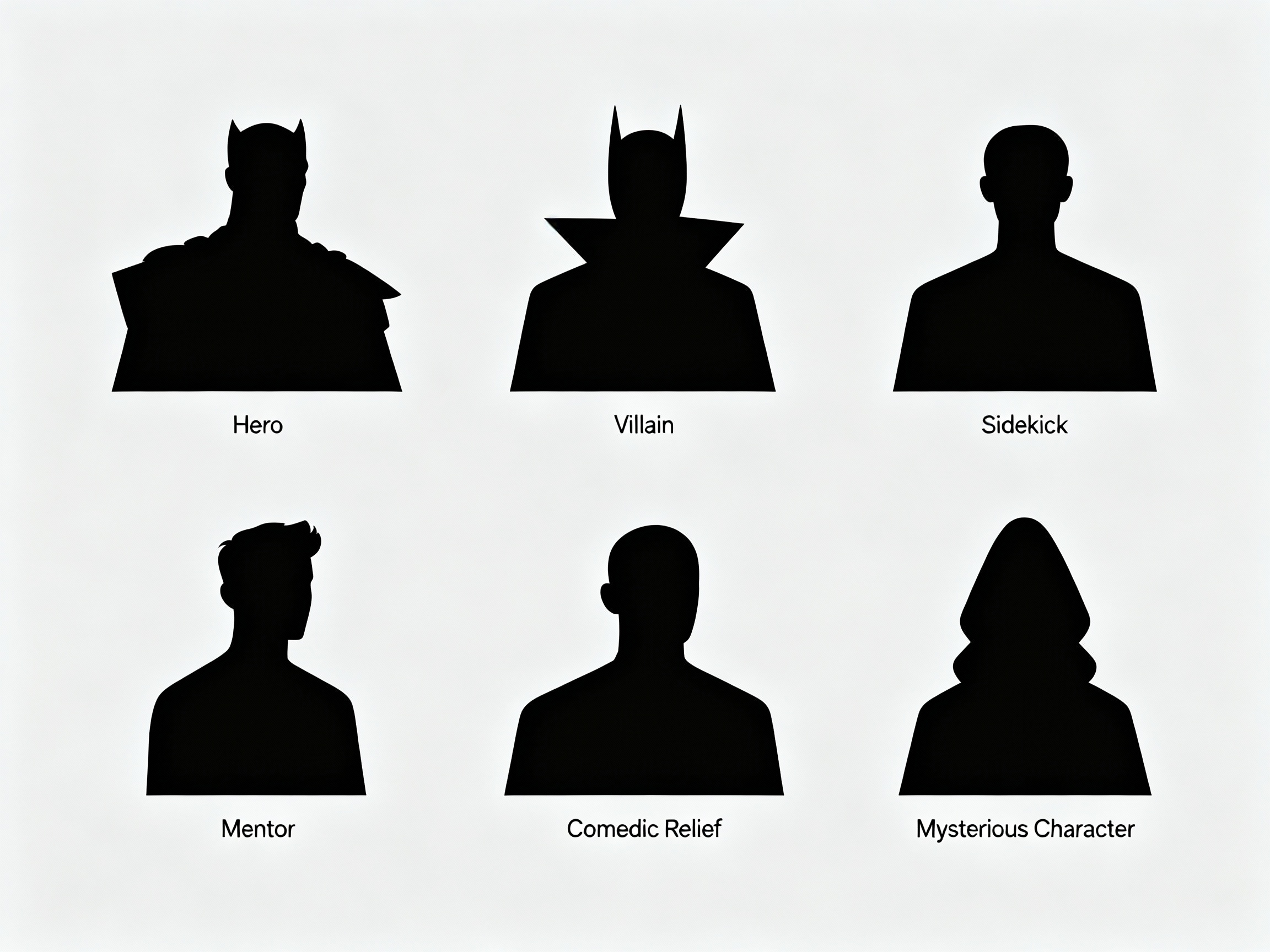
In a world saturated with design, the difference between forgettable and unforgettable often comes down to a single factor: storytelling. The most successful brands, apps, websites, and products aren't necessarily the ones with the most advanced features or beautiful aesthetics—they're the ones that create meaningful narratives that resonate emotionally with their audiences.
Storytelling in design goes far beyond adding narrative elements to your work. It's a strategic approach that infuses meaning, context, and emotional depth into every visual, interaction, and touchpoint. When designers think like storytellers, they create experiences that users remember, share, and return to again and again.
Research shows that narratives are up to 22 times more memorable than plain facts alone, and visuals are processed 60,000 times faster than text. When you combine these two insights—storytelling's memorability and visual communication's speed—you create a powerful framework for designing experiences that stick. This comprehensive guide explores why storytelling is essential in modern design, how to implement narrative principles across disciplines, and practical techniques for weaving stories into every design decision you make. Whether you're designing interfaces, crafting brands, developing games, or creating marketing campaigns, the principles in this guide will help you create designs that engage hearts as well as minds.
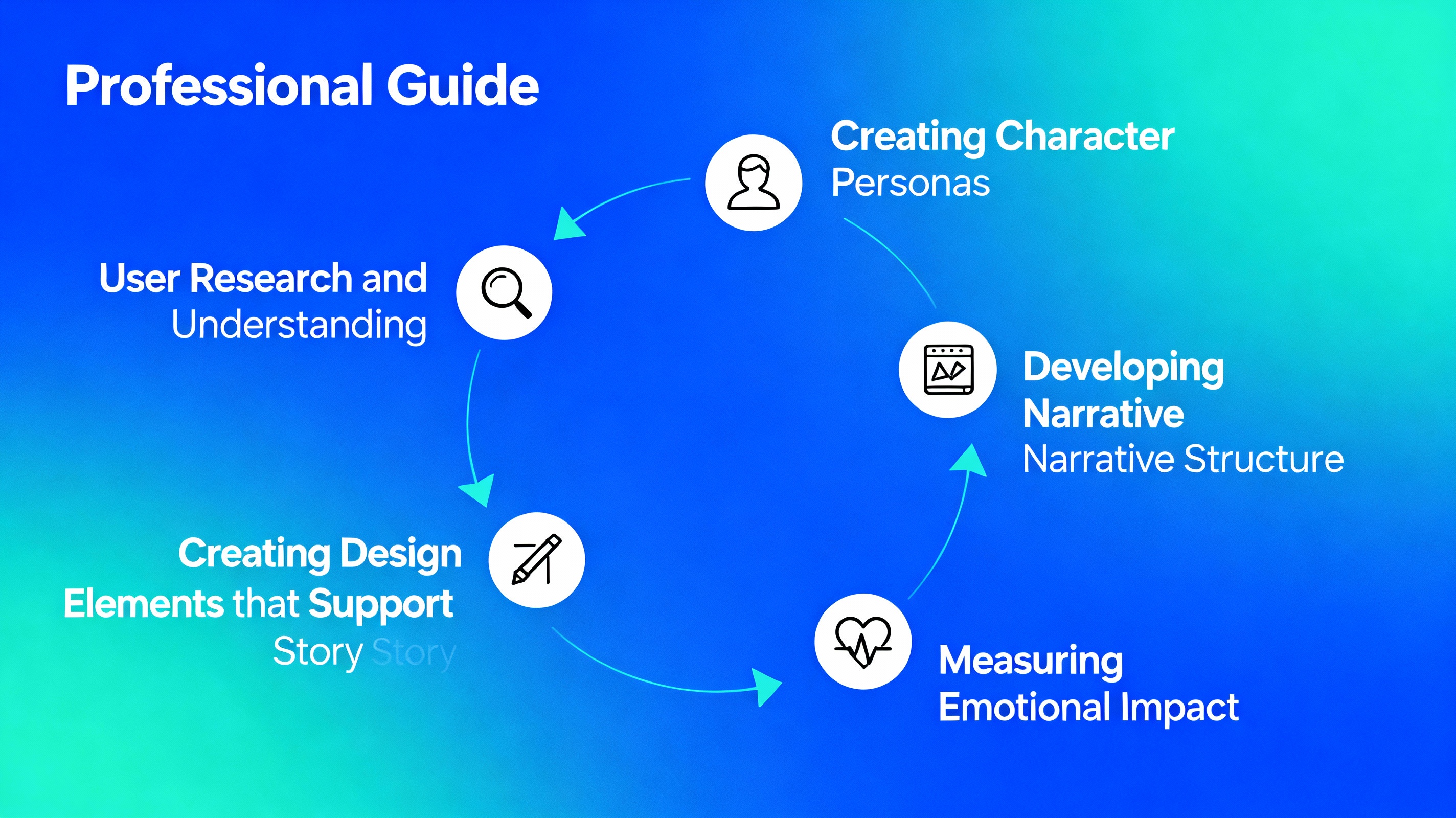
What Is Storytelling in Design?
Storytelling in design is the strategic use of narrative elements—plot, character, conflict, resolution, and emotion—to guide users through meaningful experiences and communicate brand values. It's about creating a coherent narrative arc that transforms a disconnected collection of features, buttons, and pages into a unified journey that makes sense and matters to users.
Unlike traditional storytelling that unfolds linearly through books or films, design storytelling is multidimensional. It happens through visual hierarchy, color choices, typography, interaction patterns, imagery, content, and the overall flow of an experience. Every design element becomes a word in a larger narrative, and together they tell a story about who your brand is, what problems you solve, and why your audience should care.
Core functions of storytelling in design:
Creating Emotional Connection – Stories trigger emotional responses that transcend logic. When users feel emotionally connected to a brand or product, they're more likely to engage, return, and advocate. A well-told story can transform a utilitarian interface into a delightful experience.
Building Trust and Credibility – Narratives humanize brands and products. Sharing origin stories, showing real people, and being transparent about values builds trust with audiences in ways that feature lists alone cannot.
Guiding User Actions – Stories provide context and purpose. When users understand why they're being asked to take an action—how it fits into a larger narrative and benefits them—they're more likely to complete desired interactions.
Differentiating from Competition – The way you tell your story shapes how you're remembered. In saturated markets, unique, compelling narratives create memorable identities that stand out.
Making Complex Information Accessible – Storytelling can simplify complicated concepts by embedding them within narratives that humans naturally understand. Data becomes meaningful when presented as part of a story rather than isolated numbers.
Why Storytelling Is Essential in Modern Design
The design landscape has fundamentally shifted. Functionality alone no longer differentiates products—most competitors offer similar features at similar price points. Usability is table stakes; everyone expects interfaces to work smoothly. What truly distinguishes exceptional designs is meaning, context, and emotional resonance. That's where storytelling comes in.
Research supports the power of storytelling in design:
According to studies cited in design literature, human brains are wired for narrative. When we hear facts presented without narrative context, only the language-processing parts of the brain activate. But when we hear a story, both language-processing areas and the sensory cortex activate. Stories literally engage more of our brains.
Narratives are memorable. Our brains struggle to retain lists of features or statistics, but we naturally remember stories. If you tell a user "our app saves 5 hours per week," they might forget. But if you tell a story about someone finding 5 extra hours to spend with family because of the product, the message becomes unforgettable.
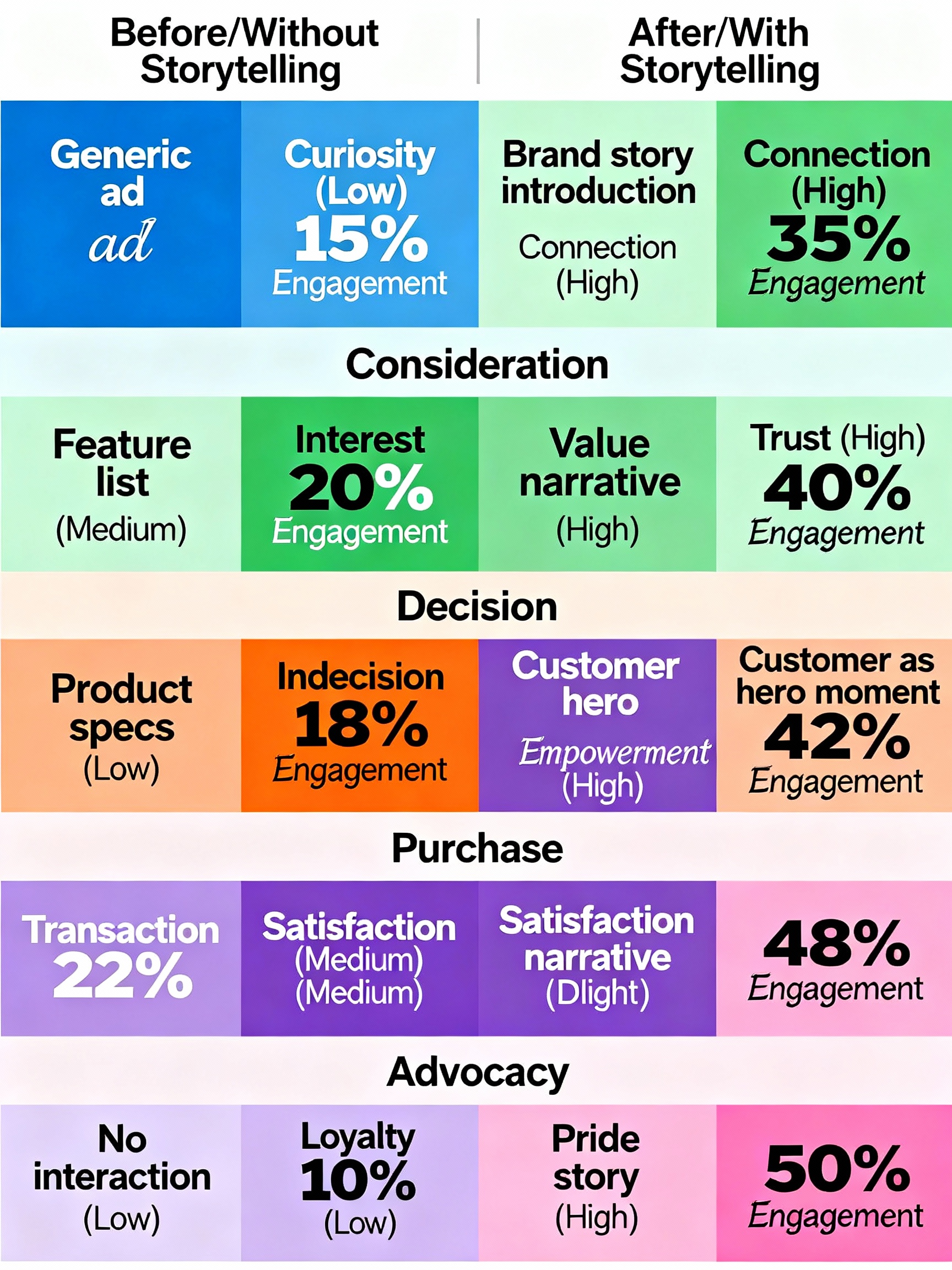
Stories drive engagement and loyalty. Users who feel emotionally connected to a brand or product are more likely to use it repeatedly, spend more, recommend it to others, and tolerate occasional shortcomings. This emotional connection is storytelling's gift.
Core Narrative Structures for Design
The Hero's Journey
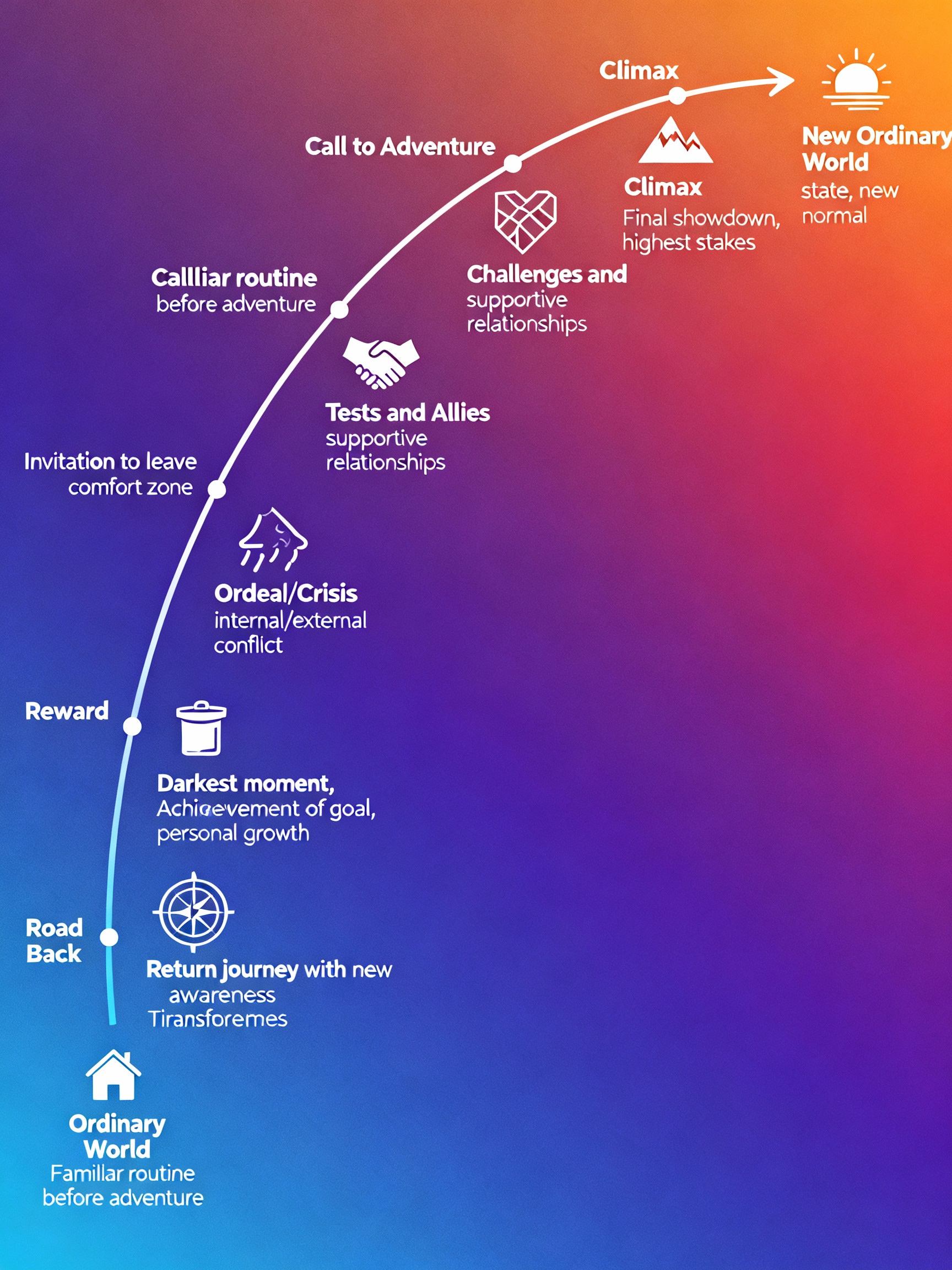
The Hero's Journey, popularized by mythologist Joseph Campbell, is perhaps the most universally powerful narrative structure. It describes a protagonist who embarks on an adventure, faces challenges, undergoes transformation, and returns home changed.
In design storytelling, the user becomes the hero, your brand becomes the guide, and the product or service is the tool that enables their transformation.
The Hero's Journey applied to design:
-
Ordinary World – The user's current state before encountering your brand
-
Call to Adventure – Your product or service offering a solution to their problem
-
Tests and Allies – Early interactions where users learn your product and gain confidence
-
Ordeal/Crisis – A critical moment where the user faces a significant challenge
-
Reward – The user achieves success with your product
-
Road Back – Integration into their life
-
Climax – The final transformation or achievement
-
New Ordinary World – The user's improved life after using your product
This structure resonates because humans instinctively understand it. By framing your user experience around this narrative arc, you tap into deep psychological patterns that audiences recognize and connect with.
Problem-Solution Structure
A simpler but equally effective narrative structure presents a problem-solution dynamic where the user faces a clear challenge, your product offers a solution, and the result is a positive transformation.
This structure works exceptionally well for product design and marketing because it's straightforward and clearly communicates value. However, it can feel transactional if not enriched with character development and emotional elements.
Transformation Arc
The transformation arc focuses on change and growth. It emphasizes how the user or their situation changes through interaction with your product. This structure particularly resonates in fitness, education, productivity, and personal development categories.
Implementing Storytelling: The Design Process
Step 1: Research and Understand Your Audience
Storytelling begins with deep audience understanding. Before designing anything, invest time learning who your users are: their goals, challenges, values, aspirations, and daily contexts.
Research activities:
User Interviews and Surveys – Ask open-ended questions about user needs, frustrations, and what success looks like for them. Listen for emotional language and motivations.
Ethnographic Research – Observe users in their natural environment. Watch how they actually use products, what challenges they face, what workarounds they've created.
Persona Development – Create detailed personas representing your core user segments. Include not just demographics but psychographics: values, fears, aspirations, and emotional drivers.
Journey Mapping – Document the user's complete journey with your product or service, including emotional highs and lows at each touchpoint.
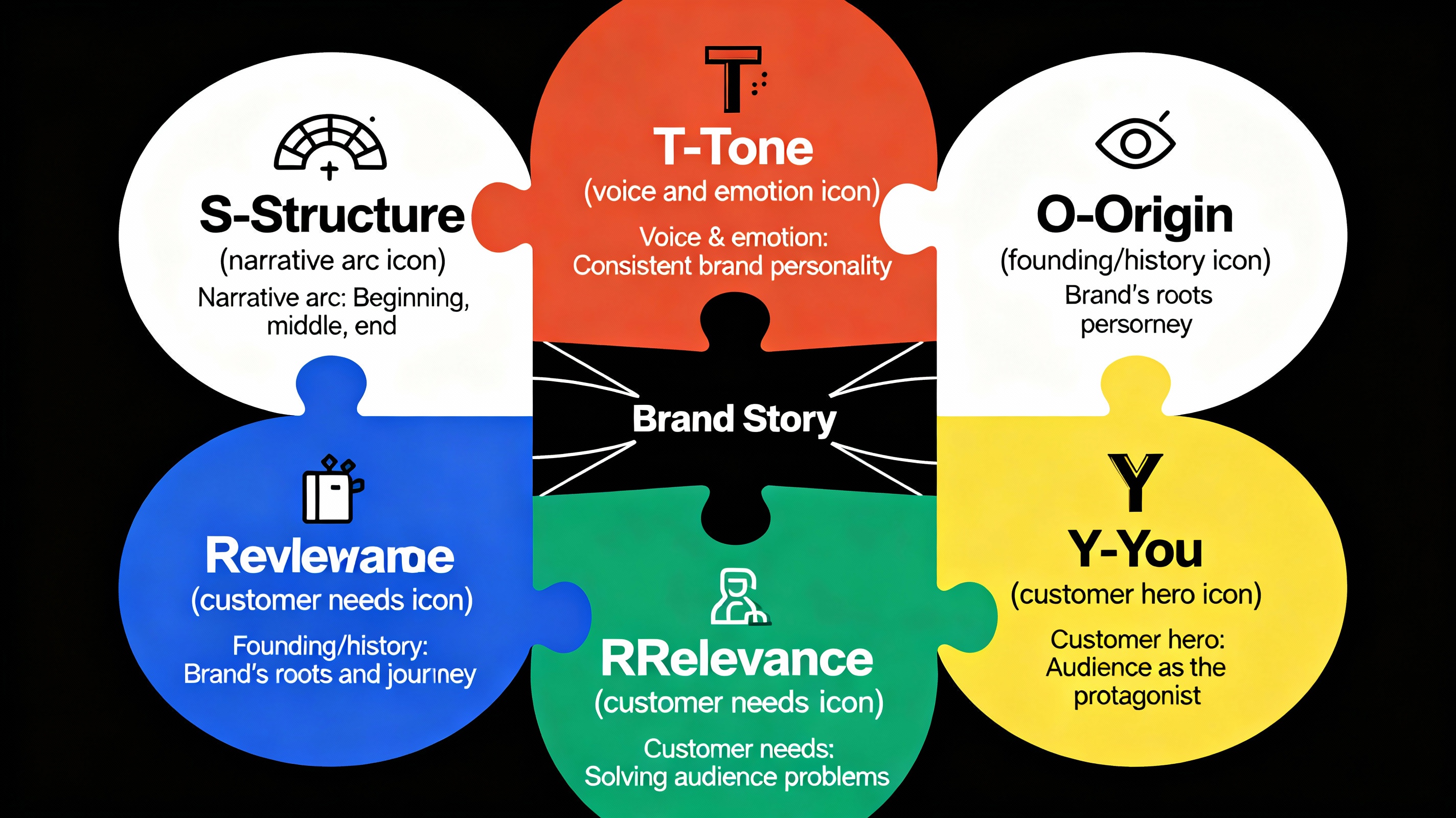
S – Structure – Choose a narrative arc (Hero's Journey, Problem-Solution, Transformation) that aligns with your brand promise. What's the overall shape of the story you're telling?
T – Tone – Define the emotional voice and personality. Is your brand authoritative, playful, empowering, comforting? This tone should permeate all communications.
O – Origin – Ground your narrative in authentic origins. Why does your company exist? What problem sparked its creation? Real origin stories humanize brands.
R – Relevance – Map your brand's narrative directly to customer pain points and goals. How does your story address what your users care about?
Y – You – Position the customer as the hero of the story, with your brand as the guide. This empowers users and creates emotional investment.
A clearly defined narrative theme ensures consistency across all design decisions. Every choice—from color palette to interaction patterns—should reinforce your core story.
Step 3: Translate Story into Visual and Interaction Design
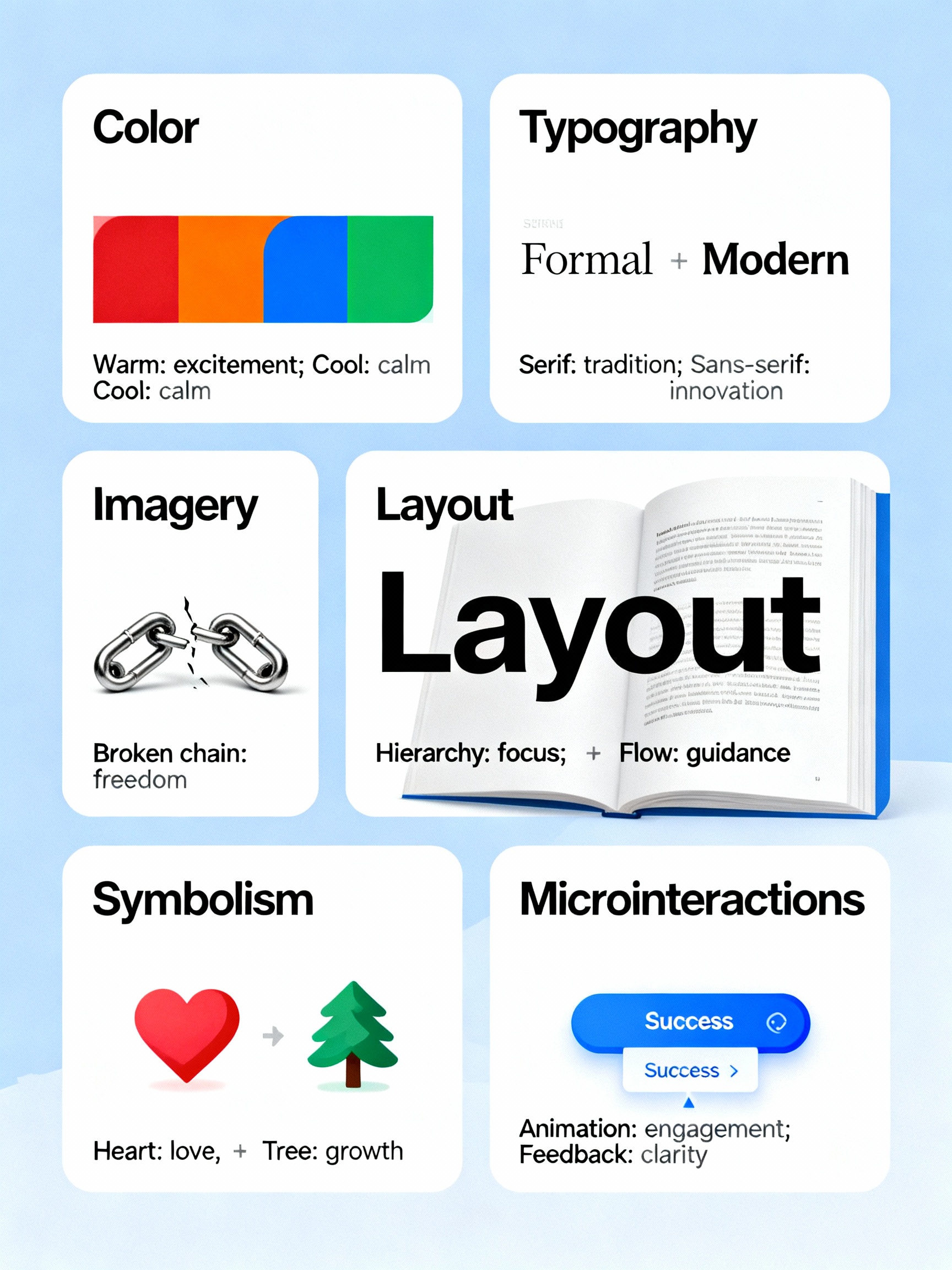
Visual storytelling elements:
Color and Emotion – Different colors evoke specific emotional responses. A calming wellness app uses soft blues and greens; an energetic fitness app uses vibrant reds and oranges. Color choices should support your story's emotional tone.
Typography and Voice – Font choices communicate personality. Serif fonts feel traditional and trustworthy; sans-serif feels modern; handwritten feels personal. Text voice should align with your brand's tone.
Imagery and Photography – Images tell stories visually. Real photos of real people create authenticity; illustrations feel friendly; abstract imagery suggests sophistication. Choose imagery that reinforces your narrative.
Layout and Visual Hierarchy – How you arrange elements on a page tells a story about what's important. Strategic use of whitespace, size, contrast, and position guide users through your narrative.
Icons and Symbolism – Icons communicate quickly and can carry symbolic meaning. Consistent icon language creates a coherent visual story.
Microinteractions and Animation – Small interactions like button hover states, loading animations, and transitions tell micro-stories that delight and guide users. These moments are opportunities to reinforce your brand's personality.
Step 4: Create Emotional Touchpoints Throughout the Experience
Exceptional design doesn't just tell a story once—it creates emotional moments throughout the user journey. Each touchpoint is an opportunity to reinforce narrative and deepen emotional connection.
Emotional design principles:
Visceral Design – The immediate emotional response to visuals and aesthetics. Beautiful, well-crafted design creates positive visceral responses that predispose users to engage.
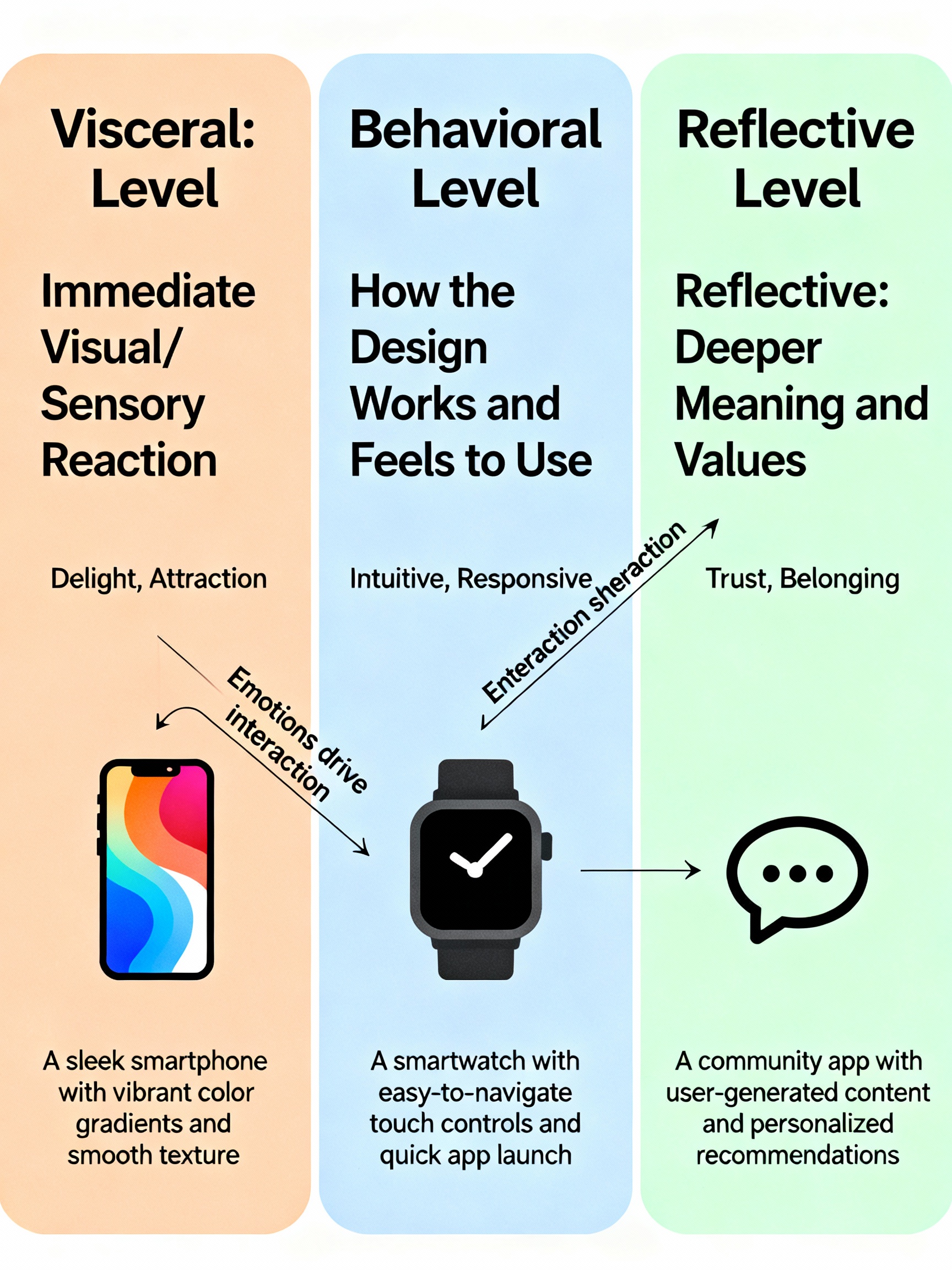
Behavioral Design – How the design works and feels to use. Intuitive, responsive, delightful interactions create positive emotional experiences at the behavioral level.
Reflective Design – The deeper meaning and values communicated through design. This level addresses personal significance and brand values, creating lasting emotional connections.
Creating delightful moments:
-
Loading animations that feel personality-driven rather than utilitarian
-
Success messages that celebrate user achievements
-
Error states that gently guide users while maintaining brand tone
-
Onboarding experiences that tell a story about the product's purpose
-
Empty states that inspire rather than disappoint
-
Surprise interactions that delight and build affection
Step 5: Maintain Narrative Consistency Across Channels
Design storytelling requires consistency across all customer touchpoints: website, app, email, social media, physical spaces, and customer service interactions.
Consistency strategies:
Brand Style Guide – Document your brand's visual language, tone, messaging principles, and storytelling approach. This ensures everyone creating communications for your brand tells a consistent story.
Unified Messaging – Ensure all content, from marketing copy to UI text, reflects the same brand voice and values. Dissonance between channels confuses audiences and dilutes narrative.
Cross-Channel Integration – Plan how your story unfolds across different platforms. The narrative might begin on social media, deepen through email, and culminate in product experience.
Regular Audits – Periodically review all brand communications to ensure consistency and identify opportunities to strengthen the narrative.
Storytelling Across Design Disciplines
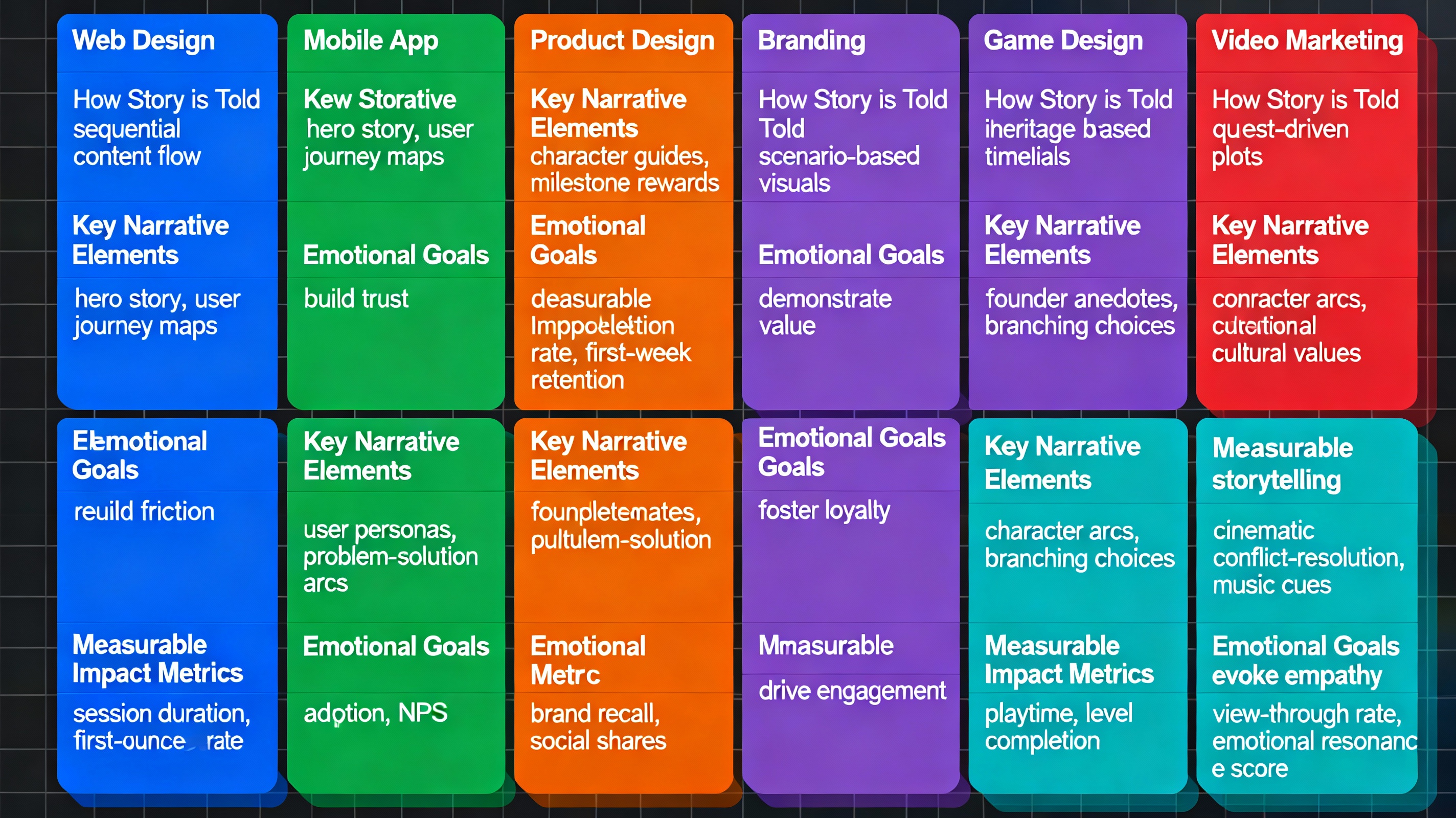
Storytelling in Web Design
Websites are powerful storytelling canvases. Through hero sections, navigation structure, content progression, and visual design, websites can unfold compelling narratives about brands and their value.
Effective web storytelling techniques:
-
Hero section that immediately communicates the story's premise
-
Content progression that guides visitors through a narrative arc
-
Visual hierarchy that directs attention through the story
-
Customer testimonials that add character perspective to your narrative
-
Case studies that demonstrate narrative through real outcomes
-
Parallax scrolling that creates immersive storytelling experiences
Storytelling in Mobile App Design
Apps tell stories through onboarding sequences, in-app guidance, progressive disclosure, and notification messages. The constraints of mobile design demand efficiency, but storytelling helps users understand why each interaction matters.
Mobile app storytelling:
-
Onboarding flows that teach the app's story and demonstrate key benefits
-
In-app guidance that tells stories about features through context, not manuals
-
Notification messaging that tells stories about user progress and achievements
-
Empty state illustrations that tell stories when there's no user data
Storytelling in Product Design (Physical Products)
Product design storytelling happens through form language, material choices, packaging, and the use experience itself.
Product storytelling considers:
-
Form language that suggests the product's purpose and personality
-
Material selections that communicate quality and values
-
Packaging design that tells the brand story before the product is used
-
User experience that tells a story through interaction
-
Longevity and heirloom value that suggests the product is worth keeping
Storytelling in Branding
Brand storytelling is foundational to all design disciplines. The brand story—why the company exists, what it stands for, the journey it's taken—informs visual identity, messaging, and all communications.
Brand storytelling elements:
-
Origin story – Why and how the brand began
-
Values narrative – What the brand believes and stands for
-
Customer narrative – How customers' lives improve through the brand
-
Visual identity – Logo, color palette, typography, imagery all supporting the story
-
Brand voice – Consistent tone across all communications
Storytelling in Game Design
Games are perhaps the richest storytelling medium available to designers. Through narrative, characters, gameplay mechanics, environmental design, and player agency, games create deeply immersive stories where players become active participants.
Game narrative design:
-
Story-driven mechanics where gameplay and narrative are inseparable
-
Character development that makes players invested in character outcomes
-
Environmental storytelling that communicates plot through world design
-
Player agency where choices feel meaningful and impact the story
-
Emotional beats timed to gameplay progression
The Power of Emotional Connections Through Design Storytelling
The ultimate power of storytelling in design lies in its ability to create emotional connections between users and brands. Emotional connections drive behavior far more powerfully than rational appeals.
Research from functional MRI studies shows that when people hear stories, their brains don't just process the language and information—additional areas of their brains activate, including those responsible for taste, movement, and emotion. This means stories literally change how people experience information. A user won't remember that an app "saves 20 minutes daily," but they might remember a story about reclaiming time for what matters.
Emotional connections created through storytelling lead to:
Increased Engagement – Users emotionally invested in a narrative are more likely to explore features, spend time, and return repeatedly.
Brand Loyalty – Emotional connections create loyalty that transcends product features. Users feel affinity for brands whose stories resonate with their values.
Word-of-Mouth Marketing – People naturally share stories that resonate emotionally with them. Storytelling-driven design creates experiences worth talking about.
Premium Pricing Power – Products with strong brand stories can often command premium pricing because they offer emotional value alongside functional benefits.
Customer Lifetime Value – Emotionally connected customers spend more, return more frequently, and tolerate minor shortcomings rather than switching to competitors.
Common Storytelling Mistakes to Avoid
Ignoring User Agency – The best stories position users as heroes. If your narrative positions the brand as the hero and users as passive spectators, the story fails to engage. Remember: the customer's journey is the story.
Over-Complicating the Narrative – Simple, clear narratives resonate more powerfully than complex, multi-layered stories. A simple story about solving a real problem beats an elaborate narrative that confuses.
Inconsistent Storytelling – When storytelling is inconsistent across channels and touchpoints, audiences become confused. A warm, playful narrative on social media paired with corporate-speak on the website creates cognitive dissonance.
Telling Instead of Showing – The strongest design narratives show rather than tell. Rely on visuals, interactions, and implicit communication rather than explicitly stating what the story is.
Forcing Story Where It Doesn't Belong – Not every design needs an elaborate narrative. Simple tools with simple purposes might not require elaborate storytelling. Match narrative complexity to product complexity.
Losing Sight of Function for Story – Design storytelling should enhance user experience, not replace it. A beautifully told story with poor usability ultimately fails. Story and function must work together.
Inauthentic Narratives – Audiences detect falseness. Origin stories must be real; brand values must be genuine; customer stories must be authentic. Inauthentic narratives damage trust irreparably.
Quick Takeaways
-
Storytelling is essential in modern design – it creates emotional connections that drive engagement, loyalty, and word-of-mouth in ways aesthetics alone cannot.
-
Stories are more memorable than facts – narratives are up to 22 times more memorable than isolated information, making them powerful communication tools.
-
Users become heroes in your design story – position customers as the main characters and your brand as the guide supporting their transformation.
-
The Hero's Journey provides a universal narrative structure – this proven framework resonates across cultures and creates predictable emotional engagement.
-
Define your brand story early – use frameworks like S.T.O.R.Y. to articulate your narrative before making design decisions.
-
Visual and interaction design elements communicate story – color, typography, imagery, layout, icons, and microinteractions all reinforce your narrative.
-
Create emotional touchpoints throughout the experience – visceral, behavioral, and reflective design elements should work together to deepen emotional connection.
-
Maintain consistency across channels – unified storytelling across website, app, email, and social ensures audiences hear a coherent narrative.
-
Emotional connections drive behavior – users become loyal advocates when they feel emotionally connected to a brand's story.
-
Show, don't tell – the strongest narratives are communicated through design and experience rather than explicit statements.
-
Authenticity matters – audiences detect and reject inauthentic narratives; your stories must be genuine.
-
Balance story with function – compelling narratives should enhance, not replace, usability and functionality.
Conclusion
Storytelling in design is no longer a nice-to-have embellishment—it's a strategic necessity. In competitive markets where products and features commoditize, meaning and emotional resonance differentiate. The brands and products that win in users' attention and loyalty are those that tell compelling stories about who they are, what they believe, and how they improve lives.
The journey from understanding this principle intellectually to implementing it in your design work requires practice, research, iteration, and genuine empathy for your users. It means resisting the temptation to make your brand the hero and instead positioning users as protagonists in their own stories, with your product as the tool that enables their transformation.
Start with user research that goes beyond demographics to understand real motivations and emotions. Develop a clear brand narrative that genuinely reflects your values and connects to user needs. Translate that narrative into visual and interactive design decisions that reinforce the story at every touchpoint. Create moments of delight and surprise that remind users why they love your brand. Measure emotional impact alongside traditional metrics.
The most memorable designs—the ones users return to, recommend, and remember years later—aren't the ones with the most features or polished aesthetics. They're the ones that make users feel understood, valued, and transformed. Those feelings emerge from stories well-told through design that respects both art and function, both beauty and usability.
Begin your next design project by asking not "What features should I include?" but "What story do I want to tell, and what transformation will users experience?" Let that narrative guide every decision, and watch as your designs become not just functionally excellent but emotionally unforgettable.
Frequently Asked Questions About Storytelling in Design
Q1: Can all products benefit from storytelling?
A: Most products benefit from some level of storytelling, but the complexity varies. A simple utility tool might need a straightforward problem-solution narrative; a lifestyle brand needs a richer, more elaborate story. The key is matching narrative complexity to product complexity and user expectations. Even the simplest products have stories—"why was this built?" is the beginning of that story.
Q2: How do I measure if storytelling is actually working?
A: Traditional metrics like engagement time, return rate, and task completion tell part of the story. But also measure emotional impact through user interviews, surveys asking about emotional connection to the brand, and qualitative feedback. Monitor metrics like Net Promoter Score (likelihood to recommend), which correlates with emotional attachment. Track how much users share your content—people naturally share stories that resonate emotionally.
Q3: Can storytelling work for B2B products, or just B2C?
A: Storytelling works powerfully in B2B. B2B audiences are still human beings with emotions. They respond to stories about problem-solving, success, growth, and partnership. B2B storytelling often emphasizes transformation and value creation rather than emotional indulgence, but narrative principles remain equally powerful.
Q4: How do I tell my brand's story authentically?
A: Start with the truth. Why did your company actually start? What problem was the founder genuinely trying to solve? What values do you actually hold (not just want to appear to hold)? Customers can detect inauthenticity instantly. If your origin story is boring, that's okay—tell it honestly and authentically. Authenticity builds trust far more than polished fiction.
Q5: What if my brand doesn't have an exciting story?
A: Every brand has a story; some are just more obvious than others. Look deeper: What problems do you solve? How do customers' lives improve? What values drive your team? What's your unique perspective on your industry? Even "boring" products have interesting stories when you look at the authentic human motivations behind them. The story doesn't need to be exotic—it needs to be real.
Q6: How long does it take to develop storytelling into a design?
A: Storytelling doesn't add time to the design process—it clarifies it. Understanding your narrative early eliminates wasted effort on directions that don't support your story. Weeks spent on research and narrative definition save months of design iteration and changes. Storytelling is an efficient investment that pays dividends throughout the project.
Share Your Design Stories
What design stories are you telling your audience? We'd love to hear about narrative approaches you've tried and how storytelling has impacted your design work. Share your experiences in the comments to help other designers understand storytelling's power.
If this guide deepened your understanding of storytelling's role in design, share it with designers, marketers, product managers, and creatives working to build more meaningful experiences. And follow us for continued insights on narrative design, emotional connection, and creating experiences that resonate.
School of Visual Arts. (2024). What Is Storytelling in Design? Retrieved from https://productsofdesign.sva.edu/blog/what-is-storytelling-in-design
StoryFlint. (2025). 4 Ways to Construct a Designing Principle for Your Story. Retrieved from https://www.storyflint.com/dives/designing-principle-story
Postiz. (2025). 7 Powerful Visual Storytelling Techniques for 2025. Retrieved from https://postiz.com/blog/visual-storytelling-techniques
Pixune. (2025). Game Narrative Design Complete Guide. Retrieved from https://pixune.com/blog/game-narrative-developing-a-story-that-works/
BlueTect. (2025). Mastering the Art of Visual Storytelling in 2025. Retrieved from https://bluetext.com/blog/mastering-the-art-of-visual-storytelling-in-2025/
Future Processing. (2025). Storytelling in Design: The Secret Role of Narrative. Retrieved from https://www.future-processing.com/blog/storytelling-in-design-the-secret-role-of-narrative/
Ramotion. (2025). Emotional Engagement: Meaningful Connections Through Design. Retrieved from https://www.ramotion.com/blog/emotional-engagement/
Think Appart. (2025). Storytelling in Branding: Crafting Narratives That Resonate. Retrieved from https://thinkappart.com/other/storytelling-in-branding-crafting-narratives-that-resonate/