Thoughtful Gift Giving with Handmade Toys
The human touch that factory production can’t replicate
The Human Touch That Factory Production Can’t Replicate
There is a profound difference between receiving a mass-produced toy purchased from a shelf and receiving something made by human hands with intention and care. You can feel it the moment you hold a handmade item. The attention to detail. The slight imperfections that prove it was crafted by someone, not manufactured in bulk by machines.
Handmade toys occupy a unique space in the gift-giving world. They are not just objects. They are conversations frozen in time between maker and recipient. Every stitch, every painted detail, every material choice reflects decisions made by someone who was thinking about the person receiving it. This human element transforms a toy from a commodity into a keepsake.
In an era of infinite consumer choices and one-click purchasing, handmade gifts have become increasingly rare and therefore increasingly precious. When you give a handmade toy, you are not just giving an object. You are giving evidence of time, skill, thoughtfulness, and care. You are saying, “I valued you enough to create something with my own hands.”
This guide explores the art and meaning of handmade gift-giving, why handmade toys matter more than ever, and how to choose or create handmade gifts that truly resonate.
Why Handmade Toys Feel Different
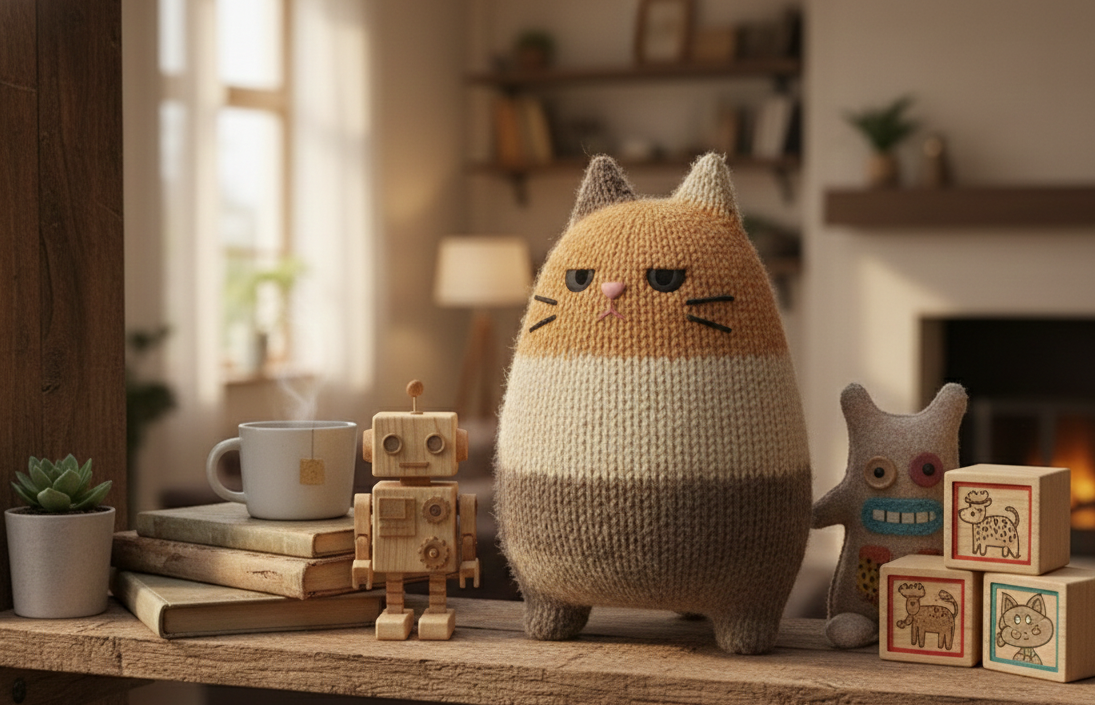
Before exploring specific handmade gift ideas, it is worth understanding what makes handmade fundamentally different from mass-produced, and why that difference matters emotionally and developmentally.
The Visible Care in Every Detail
A handmade toy carries evidence of the maker’s attention and decisions at every level.
• Material selection: Why did the maker choose this specific fabric, wood, or material? What thought went into that choice?
• Design details: Every painted feature, embroidered element, or textured surface represents a decision made with the recipient in mind.
• Construction method: The toy was built thoughtfully, piece by piece, rather than stamped out by machinery.
• Quality control: The maker personally ensured the toy was safe, durable, and well-made, not just acceptable by factory standards.
This visible care accumulates. A child holding a handmade plush animal can sense that someone made it specifically for them. An adult receiving a handmade wooden toy understands that time was invested in their happiness.
The Authenticity of Imperfection
Paradoxically, the slight imperfections in handmade items are part of what makes them precious. A seam that is not perfectly straight, colors that vary slightly, proportions that are unique. These are not flaws. They are proof of human creation.
Mass-produced toys are designed for uniformity and consistency. Handmade toys are designed for character and authenticity. In a world of perfect digital images and identical consumer products, that authenticity is increasingly rare and valued.
Research shows that people actually prefer handmade items because of their slight imperfections. These perceived imperfections make items feel more genuine, more human, and more valuable as gifts.
The Story Behind the Object
Every handmade toy has a story. Not just the story of the person who receives it, but the story of the person who made it.
Why did this artisan become a toymaker? What brought them to this craft? What values do they embody through their work? When you give a handmade toy, you are introducing the recipient to that story.
The gift becomes more than an object. It becomes a connection to a creative human whose hands and imagination brought it into being.
Handmade Toys vs. Mass-Produced: What Science Tells Us
Research into gift-giving psychology reveals clear differences in how people respond to handmade versus mass-produced items.
Perceived Value and Emotional Impact
Studies show that recipients perceive handmade gifts as more valuable than their market price would suggest. Not because of cost, but because of time and skill.
When someone receives a handmade toy, they understand that hours were invested into creating something for them. This time investment carries emotional weight that even expensive store-bought items cannot match.
Longevity and Emotional Attachment
Handmade toys have longer emotional lifespans than mass-produced ones.
A handmade plush animal made by a parent often becomes a lifelong keepsake, sometimes passed down through generations. A factory-made equivalent, no matter how high quality, is far less likely to achieve that status.
This difference comes down to meaning. Handmade toys are not replaceable. There is only one, made by one person, for one specific recipient.
Impact on Child Development
For children, handmade toys offer unique developmental benefits.
• Enhanced imaginative play
• Stronger emotional attachment
• Communication of values like care and effort
• Inspiration for creativity and making
Children learn, often unconsciously, that time, care, and human effort matter.
Types of Handmade Toys Worth Giving
Handmade toys span an incredible range, from simple to complex, from soft to structured, from traditional crafts to contemporary art objects.
Handmade Plush Toys and Soft Sculptures
Why They Matter
• Approachable and emotionally resonant
• Easy to personalize
• Durable and safe when well-made
• Often become lifelong comfort objects
What Makes Them Special
A handmade plush toy reflects deliberate design choices. Fabric selection, stitching, proportions, expressions. Everything is intentional.
When made for a specific child, these toys can incorporate favorite colors, personality traits, or even likeness, becoming a reflection of how the maker sees them.
Handmade Wooden Toys
Why They Matter
• Natural materials that age beautifully
• Heirloom quality
• Visible craftsmanship
• Timeless appeal
What Makes Them Special
Wood grain, knots, and variations are features, not flaws. The maker understands the material deeply and chooses wood for durability, beauty, or sustainability.
Holding a handmade wooden toy creates a tactile awareness of nature and craft that mass-produced items rarely offer.
Handmade Dolls and Figurines
Why They Matter
• Affirm identity
• Capture emotion and personality
• Often become family heirlooms
What Makes Them Special
The face of a handmade doll carries the personality of the maker. Hand-painted or embroidered features give these dolls a presence that feels alive and intentional.
Knitted, Crocheted, and Sewn Items
Why They Matter
• Each stitch represents time and care
• Exact customization possible
• Blend emotional and practical value
What Makes Them Special
Thousands of stitches become thousands of small acts of care. This is why these gifts feel deeply thoughtful. The recipient senses the commitment involved.
Mixed-Media and Art Toys
Why They Matter
• Unique, artistic expression
• Often one-of-a-kind
• Appeal to both children and adults
What Makes Them Special
These toys blur the line between art and play. Created by artists, they are meaningful as objects, toys, and cultural artifacts.
The Craftsmanship Behind Handmade Gifts
Understanding the craft explains why handmade toys are worth seeking out and why artisans deserve respect and fair compensation.
Skill Development Takes Time
Toymakers invest years mastering techniques like woodworking, sewing, sculpting, and finishing. That expertise shows in durability, safety, and thoughtful design.
Material Selection Reflects Values
Handmade makers often prioritize:
• Sustainable materials
• Non-toxic finishes
• Durability over disposability
• Local sourcing
Buying handmade often means aligning with values around care, safety, and sustainability.
The Investment of Time
Handmade toys can take anywhere from 5 to 50 or more hours to create.
That time investment is part of the gift. It communicates care in a way factory production never can.
Why Handmade Matters in a Digital Age
The Antidote to Mass Production
Handmade gifts reject interchangeability. They offer uniqueness, permanence, and meaning in a disposable world.
A Vote for Human Labor and Craft
Choosing handmade supports human creativity over industrial efficiency. It preserves skills, traditions, and livelihoods.
Connection in a Disconnected World
Handmade gifts create connection between maker, giver, and recipient. They represent human presence in a digitally mediated world.
How to Choose or Create Handmade Toys
If You Are Commissioning or Purchasing
Research the Maker
Look for transparency, values alignment, strong reviews, and durable craftsmanship.
Communicate Your Vision
Share context and intention, then trust the maker’s expertise.
Plan Ahead
Quality handmade work takes time. Many artisans require months of lead time.
Invest Appropriately
Handmade costs more because it should. You are paying for skill, time, and meaning.
If You Are Making Handmade Toys Yourself
Start Small
Choose simple projects and focus on quality.
Learn from Experts
Classes, tutorials, and maker communities accelerate learning.
Prioritize Safety
Use child-safe materials and construction methods.
Document Your Process
Photos and notes add emotional value to the gift.
The Future of Handmade Gifts
Interest in handmade continues to grow due to:
• Sustainability concerns
• Desire for authenticity
• Anti-consumption values
• Connection to makers
Maker communities, online platforms, and local fairs are expanding access to quality handmade toys.
Quick Takeaways
• Handmade toys show visible care
• Imperfections increase authenticity
• Emotional lifespan is longer
• Children benefit developmentally
• Time investment equals meaning
• Values matter
• Uniqueness strengthens connection
Conclusion
In a world of mass production and instant purchasing, handmade toys stand apart.
They say your happiness is worth time. Your uniqueness deserves something unique. I value human creativity and care.
Whether purchased from an artisan or made by hand, handmade toys carry meaning that lasts. They are not measured in price, but in intention, effort, and story.
A handmade toy tells the most beautiful story of all. Someone cared enough to create something just for you.
References
Noorabad. (2025). Spring Handcrafted Gifts: Top Ideas for 2025. Retrieved from https://noorabad.com/spring-handcrafted-gifts-top-ideas-for-2025/
Protectivity. (2025). Top Trending Handmade Gift Ideas for Christmas 2025. Retrieved from https://www.protectivity.com/knowledge-centre/top-trending-handmade-gift-ideas-for-christmas-2025/
Create Gift Love. (2025). Why Do Personalised Gifts Have a Stronger Emotional Impact? Retrieved from https://www.creategiftlove.co.uk/blogs/personalised-gifts/psychology-emotional-impact
Budsies. (2025). Personalized Gifts and Toys: How Customization Affects Child Development. Retrieved from https://www.budsies.com/blog/education/personalized-gifts-and-toys-how-customization-affects-child-development/
Create Gift Love. (2025). Psychological Benefits of Receiving Personalised Gifts. Retrieved from https://www.creategiftlove.co.uk/blogs/personalised-gifts/psychology-recipient-benefits
University of Bath. (2024). Personalised Gifts Create Lasting Emotional Connections. Retrieved from https://www.bath.ac.uk/announcements/personalised-gifts-create-lasting-emotional-connections-and-enhance-self-esteem-new-research
Yazati Blog. (2025). Top 10 Corporate Gifting Ideas with Handmade Crafts. Retrieved from https://blog.yazati.com/top-10-corporate-gifting-ideas-with-handmade-crafts/
ScienceDaily. (2024). Personalized Gifts Create Lasting Emotional Connections and Enhance Self-Esteem. Retrieved from https://www.sciencedaily.com/releases/2024/12/241218132144.htm